
Main menu: |
Invited Talks: 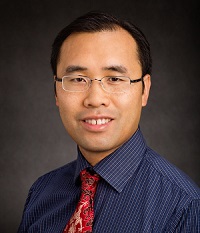
Tao Xie, University of Illinois at Urbana-Champaign Software Analytics: Towards Software Mining that Matters Abstract: A huge wealth of various data exists in software life cycle, including source code, feature specifications, bug reports, test cases, execution traces/logs, and real-world user feedback, etc. Data plays an essential role in modern software development, because hidden in the data is information about the quality of software and services as well as the dynamics of software development. To leverage such data for various software engineering tasks, software mining has been actively pursued by researchers for more than a decade. With substantial ground work already done in software mining, it is important for the research community to pay attention to the impact that our software mining research produces on industrial practices. Bio: Tao Xie is an Associate Professor in the Department of Computer Science at University of Illinois at Urbana-Champaign, USA since July 2013. Before then, he was an Associate Professor in the Department of Computer Science at North Carolina State University. He received his Ph.D. in Computer Science from the University of Washington in 2005, advised by David Notkin. He has worked as a visiting researcher at Microsoft Research Redmond and Microsoft Research Asia. His research interests are in software engineering, focusing on software testing, program analysis, and software analytics. He has served as the ACM SIGSOFT History Liaison in the SIGSOFT Executive Committee as well as a member of the ACM History Committee (ACM History SGB Liaison). He received an NSF CAREER Award in 2009. He received a 2011 Microsoft Research Software Engineering Innovation Foundation (SEIF) Award, 2008, 2009, and 2010 IBM Faculty Awards, and a 2008 IBM Jazz Innovation Award. His homepage is at http://www.cs.illinois.edu/homes/taoxie/.
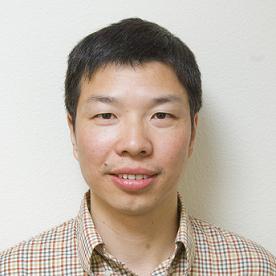
Ling Huang, Intel Labs Machine Learning, Program Analysis and Large-Scale Systems Abstract:
Today’s distributed systems (e.g., those for cloud computing and Big Data) usually consist of hundreds of software components running on thousands of computers. In such complex and flexible systems, mining the patterns in the software system to develop automatic tools for task scheduling, performance modeling and problem detection become imperative. In this talk, I will present you two examples of our work in combining machine learning and program analysis to model the software system and develop automated tools to aid the critical operations in large-scale systems.
Bio: Ling Huang is a research scientist in Intel Labs. He is currently a member of the Intel Science and Technology Center on Secure Computing at UC Berkeley. His research interests are in machine learning, systems and security, especially in efficient machine learning methods for mobile perception, system problem detection and security. Ling joined Intel Labs Berkeley in October 2007, immediately after getting his Ph.D. from Computer Science at University of California at Berkeley. During his Ph.D. study, he was affiliated with RadLab. Prior to UC Berkeley, he obtained B.S. and M.S. degree from Beijing University of Aeronautics and Astronautics (BUAA) in China, and worked more than three years as a system architect and project manager at CAXA, the No.1 CAD/CAM software company in China.
|